

How Microduct Pipe Production Lines Support the Future of Fiber Networks
24 Ekim
24 Ekim 2025

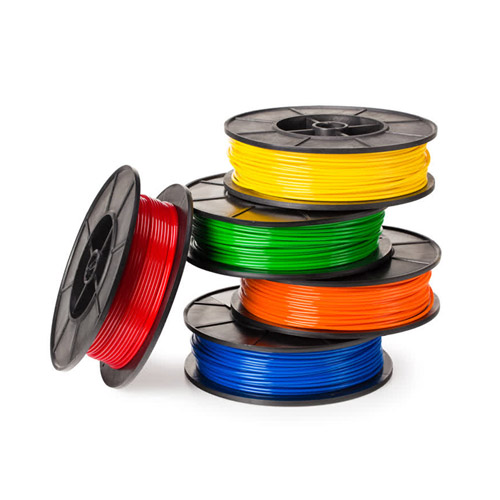
A practical guide for 3D filament manufacturers to ensure consistent quality, dimensional precision, and production efficiency while meeting industry standards.
3D printing filament is only as good as its consistency. Variations in diameter, roundness, or material properties can cause print failures, increased waste, and customer dissatisfaction. For manufacturers, robust quality control ensures repeatable performance, reduces scrap, and strengthens brand reputation.
Every meter of filament must meet precise dimensional and material standards to guarantee smooth printing and long-term reliability.
Maintaining consistent filament quality requires careful attention to key dimensional and physical characteristics:
Monitoring these parameters ensures that the filament performs reliably across different printers and applications.
Automation is key to reducing variability and waste in filament production:
Real-time monitoring allows manufacturers to correct issues immediately, minimizing rejects and improving yield.
The foundation of high-quality filament is consistent raw material:
Material consistency directly impacts extrusion performance and final filament quality.
Precise calibration ensures dimensional stability and uniform mechanical properties:
Calibrated systems reduce variability, improving both yield and end-product performance.
Quality control is not just about monitoring machines it also requires human oversight and documentation:
Documenting inspections ensures traceability and supports continuous improvement efforts.
Effective quality control in 3D filament manufacturing combines real-time monitoring, precise calibration, material optimization, and routine inspection. By implementing these practices, manufacturers can consistently deliver high-quality filament, reduce waste, and maintain customer trust.
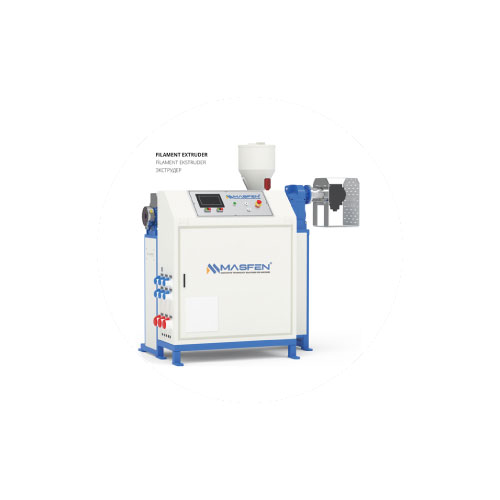
Looking to improve your 3D filament production line?
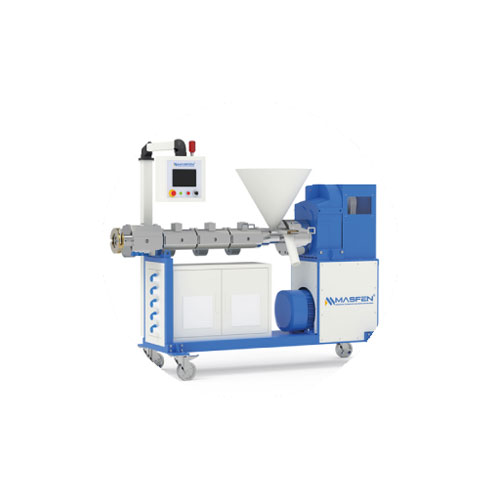
Contact our experts to explore how Masfen's production solutions can help ensure consistent quality and maximize efficiency.
Reach Our Experts